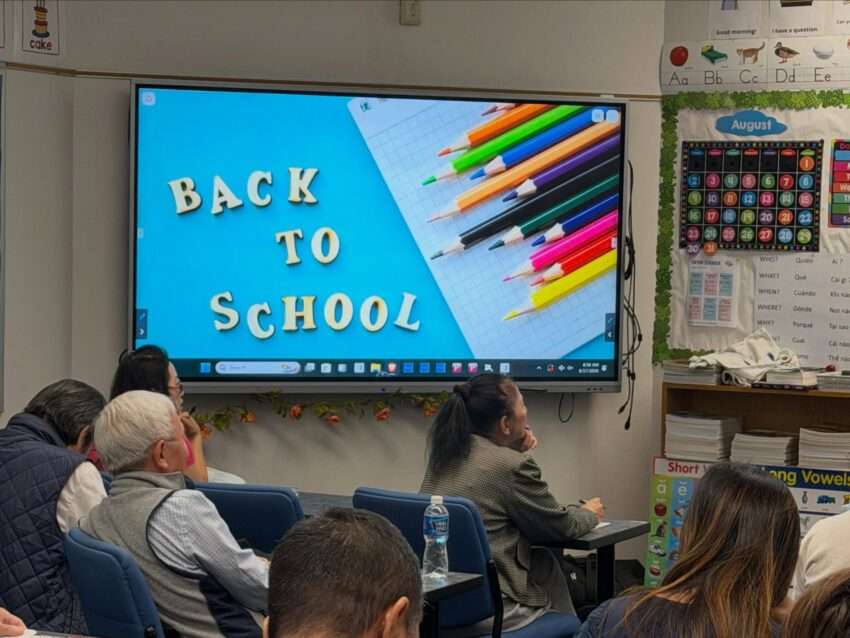
EL MONTE — When we talk about going back to school, we usually picture kids with new backpacks, parents taking first-day photos and teenagers returning to familiar hallways. But across the communities served by El Monte Union High School District, another back-to-school story is unfolding, and most of the students in it haven’t been kids for years.
More than 10,000 adults attend El Monte-Rosemead Adult School each year, according to EMRAS. Some are immigrants learning English while building lives in a new country. Others are returning for the high school diploma they never finished, while still others arrive looking for skills that might lead to a better job. Each has a different reason for walking through the classroom door, but what they take home can reach well beyond themselves.
When Learning Comes Home
Consider the more than 5,000 students who enroll annually in EMRAS English as a Second Language programs, according to the school. Learning English may begin with lessons and conversations in class, but its usefulness follows students home. Greater confidence with the language can make it easier to speak with a child’s teacher, navigate a doctor’s appointment or communicate at work.
For roughly 2,000 students enrolled each year in Adult Secondary Education, the unfinished business may be high school itself. EMRAS offers diploma, equivalency and basic education programs, giving adults another opportunity to complete an education interrupted years earlier.
There are economic reasons that matters. Full-time workers age 25 and older without high school diplomas earned median weekly wages of $770 in 2025, compared with $966 for high school graduates, according to the U.S. Bureau of Labor Statistics. Unemployment was also higher among workers without diplomas, 6.1% compared with 4.3% for graduates.
Those numbers don’t mean earning a diploma suddenly puts another $196 in someone’s weekly paycheck. Careers rarely follow such a tidy formula. They do help explain why an adult returning to school can change the economic possibilities available to a household.
Adult Education Strengthens Communities
For other students, the path runs directly toward a new occupation. EMRAS offers career training in health care, business and skilled trades, including medical assisting, nursing assistance, accounting and machining. The school also reports a 90% completion rate for its electrician program.
Research suggests those second chances can matter. In a 2024 American Economic Journal: Economic Policy study, researchers Rebecca Brough, David C. Phillips and Patrick S. Turner examined adults attending high schools created for people who had previously left school. Graduates earned 38% more five years after applying than comparable nongraduates, the researchers found.
The study involved The Excel Center, not EMRAS, so its results cannot predict what will happen to a student here. But it helps illustrate why adult education strengthens communities in ways that can be easy to overlook.
An Education That Travels
EMRAS has served adult students since 1932, and perhaps the most important thing about those nine decades is that education rarely stays with the person who receives it.
A mother learning English may become more comfortable talking with her child’s teacher. A father finally earning his diploma may qualify for work that gives his family more stability. Someone learning a trade can carry those skills into a local workplace.
That is the larger back-to-school story unfolding across the El Monte Union community this fall. Thousands of adults are returning to classrooms for deeply personal reasons, but when they leave at the end of the day, what they learned goes home with them.
And sometimes, an entire family moves forward because one person decided to go back to school.