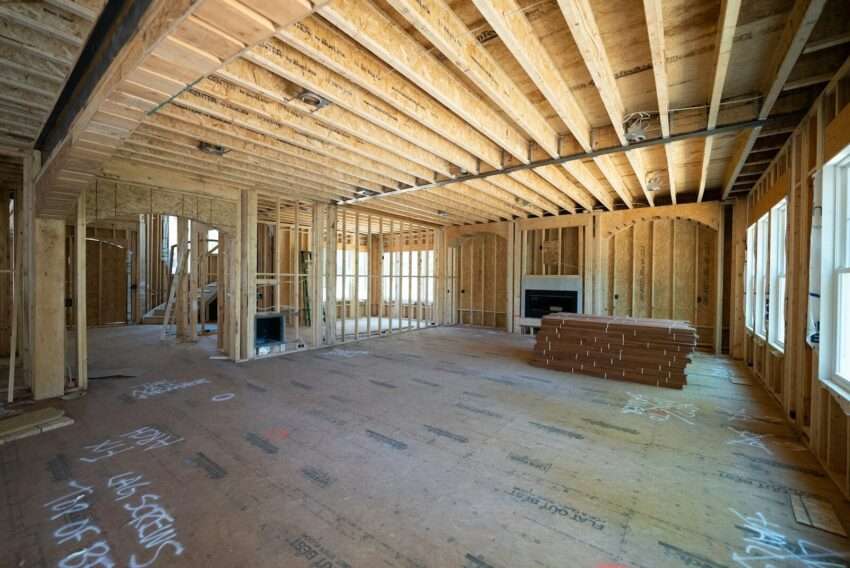
SAN GABRIEL VALLEY — Western Housing Construction Slows as builders confront high costs, financing pressures and uncertain demand. July data shows a sharp national decline in housing starts, while rising permits offer a more encouraging signal.
Privately owned housing starts fell 12.4% from June to a seasonally adjusted annual rate of 1.24 million units. Starts were also 13.5% below July 2025, according to the U.S. Census Bureau and Department of Housing and Urban Development.
Single-family starts declined 9.9% nationally to an annual rate of 808,000. That figure was 15.7% below the previous July.
Western Housing Construction Slows
The slowdown highlights the difference between approving housing and building it. Cities can change zoning and approve projects, but private developers must determine whether those projects are financially viable.
That distinction matters across El Monte, Baldwin Park, Rosemead and other San Gabriel Valley communities planning for additional housing.
Developers must account for land, labor, materials, financing and fees before starting construction. They also must consider what buyers or renters can afford.
The National Association of Home Builders cited elevated construction costs, mortgage rates and economic uncertainty among challenges facing builders. NAHB also reported that builder confidence remained weak in July.
Those pressures can delay projects even after local governments approve them.
Permits Point Toward Future Construction
Western Housing Construction Slows, but permit activity suggests builders have not abandoned future development.
Nationally, building permits increased 5% from June to an annual rate of 1.44 million units. They were 3.1% higher than in July 2025. Single-family permits rose 2.5% from June and 1.1% annually.
Permits do not guarantee that construction will begin immediately. They do show that projects continue moving through the development pipeline.
That could become important if borrowing costs decline or other economic conditions improve.
The Census Bureau defines a housing start as the point when excavation begins for a building’s footings or foundation. That makes starts a more direct measure of construction activity than plans or approvals.
Plans Meet Economic Reality
For the San Gabriel Valley, the national figures raise a practical question: How many approved homes ultimately reach construction?
The region has limited undeveloped land. New housing can require redevelopment or denser construction on existing properties, which can make projects more complex.
Residents and local officials can therefore gain a clearer picture of housing production by tracking permits, starts and completed homes instead of approvals alone.
The U.S. Census Bureau’s New Residential Construction report provides monthly permit, start and completion data. The National Association of Home Builders also tracks construction conditions affecting builders.
July’s decline shows that approving housing does not automatically produce homes. Rising permits offer a more hopeful sign, but the San Gabriel Valley’s housing supply ultimately depends on projects moving from paper to construction sites.