
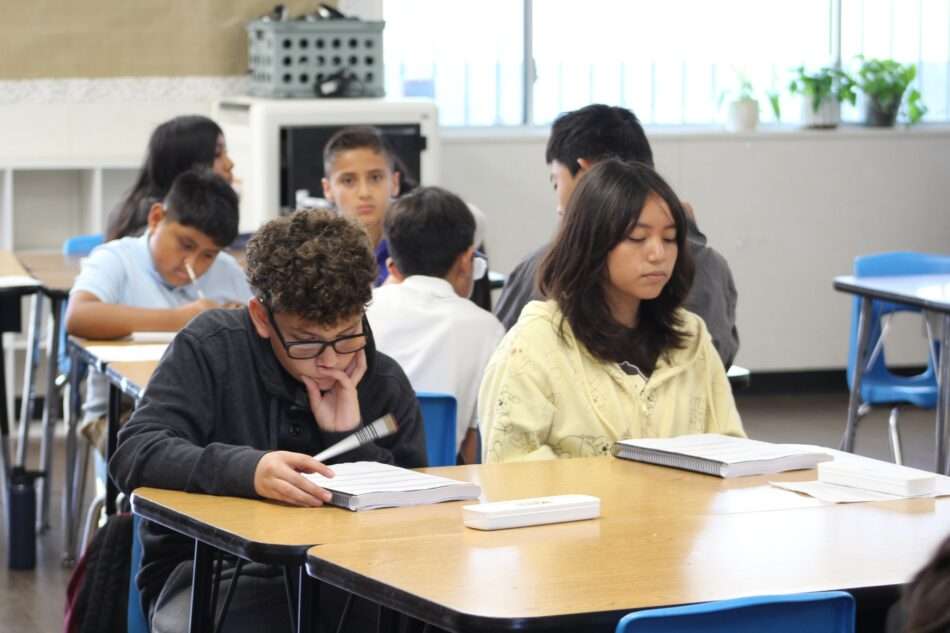
A summer math program tied to Rio Hondo College is showing strong results for El Monte students who struggled during the regular school year. The Rio Hondo Math Academy gives students a focused opportunity to recover failed math credits or strengthen skills before classes resume in the fall.
For families in El Monte, where many students balance school with work or caregiving duties, the academy offers a second chance that can keep graduation plans on track. District leaders describe the program as both an intervention and an acceleration tool, designed to help students rebuild confidence in math while staying connected to long-term academic goals.
Summer Math Academy Focuses On Access
The Rio Hondo Math Academy operates during the summer and relies on collaboration between El Monte Union High School District, Mountain View School District, and Rio Hondo College. Students attend condensed math courses that reduce distractions and allow for targeted instruction in smaller settings.
Trustees and administrators have pointed to the program’s structure as a key factor in its success. Summer scheduling lets students focus on one subject without competing course loads. Instruction is designed to address gaps that emerged during the school year, rather than repeating the same approach that led to failure.
This access-based model reframes course recovery as support, not punishment. For students who might otherwise fall behind or repeat classes, the academy provides a clear path forward.
Strong Outcomes For El Monte Students
Preliminary outcomes shared by district leaders show notable gains for students who participated. According to trustee remarks, 81 percent of Latino students enrolled in the summer math course passed. Among Asian students, the pass rate reached 91 percent.
Those results stand out in a region where math proficiency gaps often reflect broader inequities tied to income, language access, and first-generation college status. Local educators say programs like the Rio Hondo Math Academy can interrupt those patterns by giving students time and support when they need it most.
The results also suggest that short-term, intensive programs can have an outsized impact when they are well aligned with student needs.
Regional Collaboration And Replication
District officials have presented the academy’s outcomes to neighboring districts, signaling interest in using the program as a regional model. Continued collaboration with Rio Hondo College places the academy within a broader education pipeline that connects K–12 schools with higher education.
That collaboration matters for El Monte, where many students attend schools served by both Mountain View School District and El Monte Union High School District. Aligning expectations and support across systems can make academic transitions smoother for students.
Questions About Expansion
District leaders have expressed interest in continuing and potentially expanding the Rio Hondo Math Academy, though no formal vote on expansion has occurred. Any growth would depend on funding, staffing, and access to facilities during the summer months.
Trustees have also discussed reviewing math performance after standardized testing and multiple NWEA assessment cycles. Summer academy outcomes could help shape future decisions about year-round math instruction.
For El Monte families, the program represents a practical example of how targeted support can change student trajectories. As the district looks ahead, many will be watching to see whether successful models like the Rio Hondo Math Academy become a permanent part of the local education landscape.